kipn.ai
flowscan resources · how the analyzer thinks

What FlowScan v2.0 checks, and why

A category-by-category reference for the findings behind your score — start with the overview, then go deep on whichever category is dragging your report down.

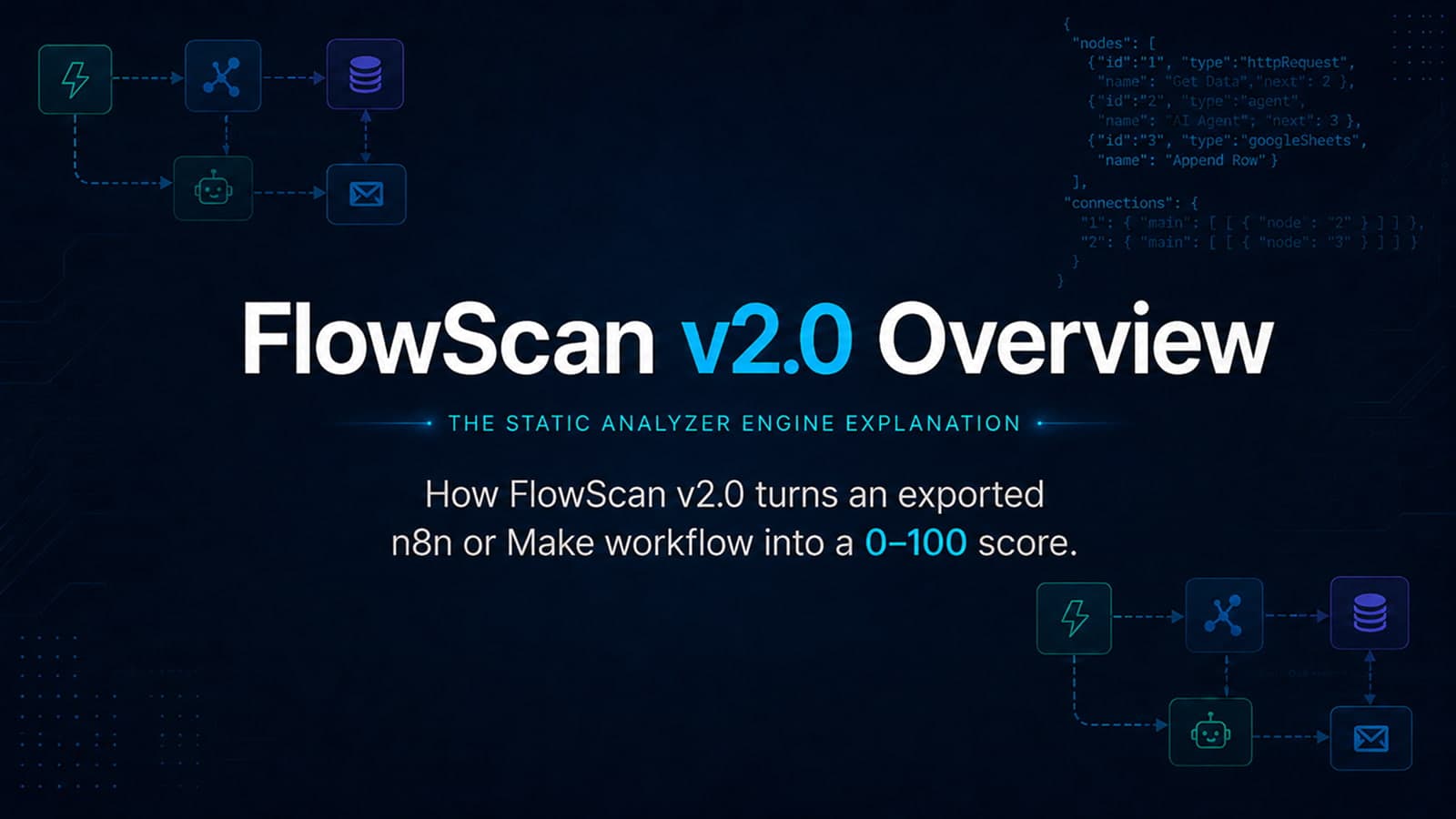
FlowScan v2.0 Overview

FlowScan v2.0 Overview

How FlowScan v2.0 turns an exported n8n or Make workflow into a 0–100 score: the seven categories, how points are deducted, the three hard caps, the Cost Exposure Score, the Controls Matrix, and the language rules every finding follows.

flowscanscoringn8nmake
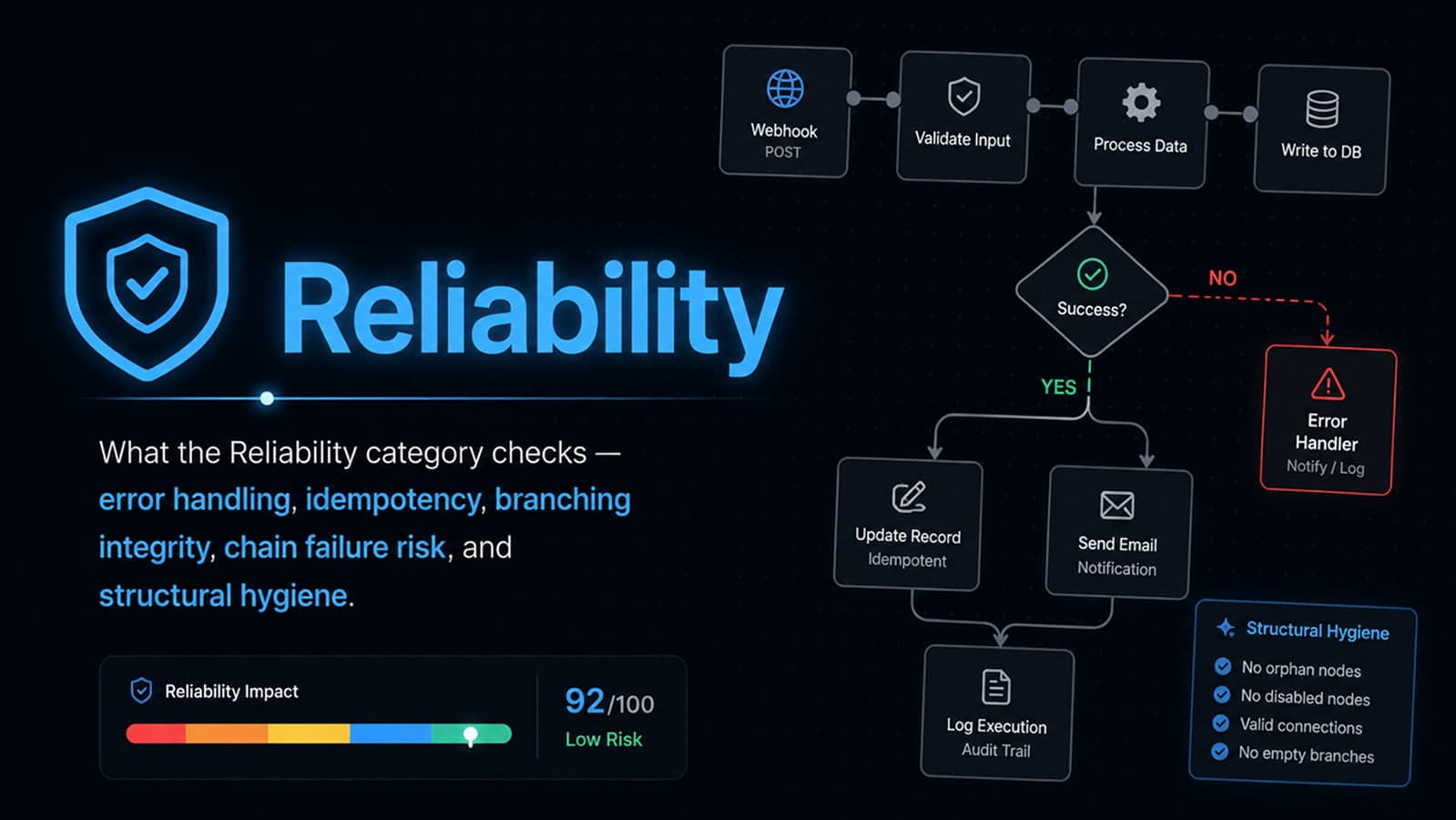
Reliability

Reliability

What the Reliability category checks — error handling, idempotency, branching integrity, chain failure risk, and structural hygiene — with examples, score impact, and recommended fixes.

flowscann8nmake
Cost Risk

Cost Risk

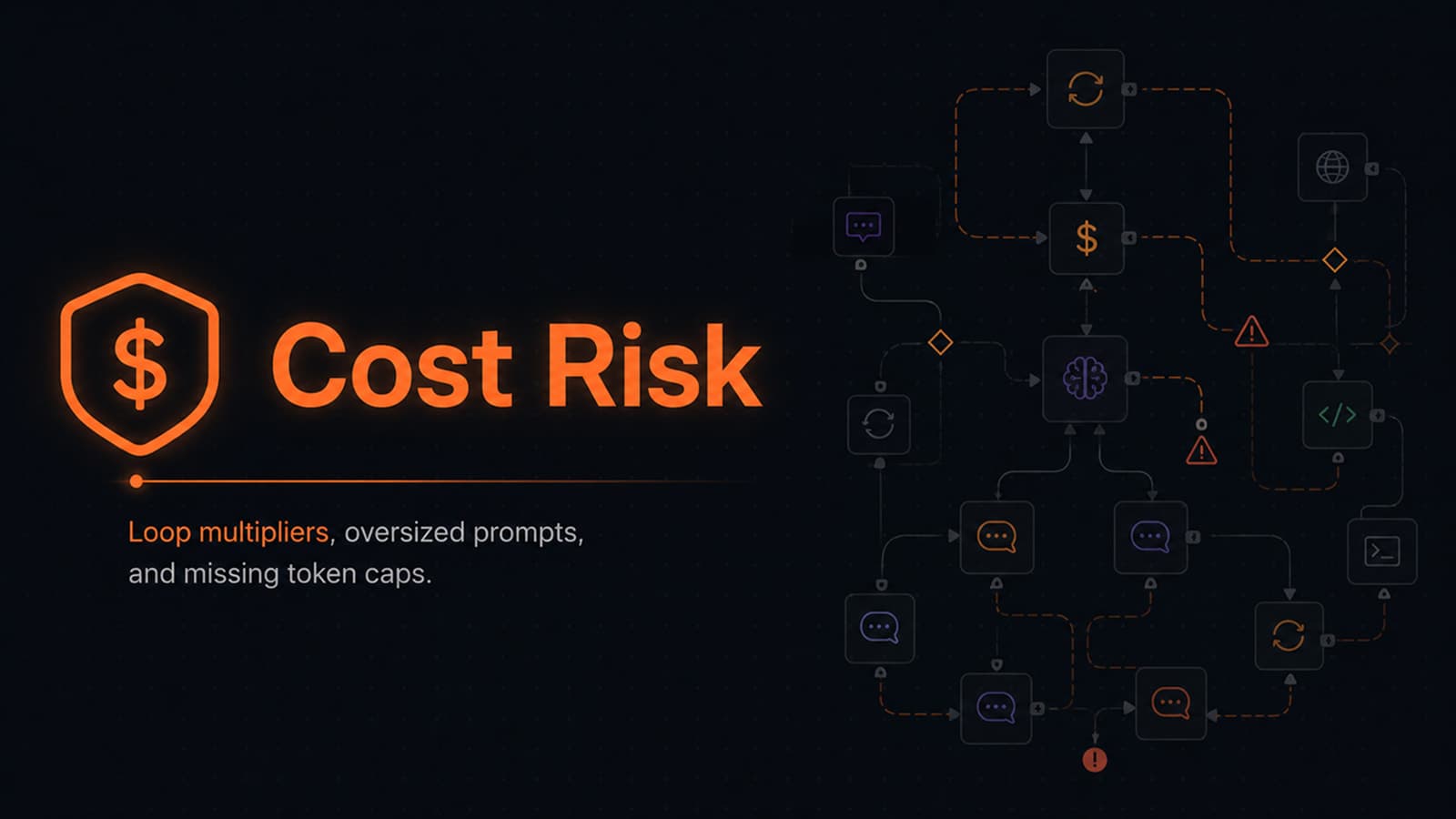
What the Cost Risk category checks — loop multipliers, oversized prompts, missing token caps, and chatty agents — with examples, score impact, and recommended fixes.

flowscann8nmake
AI Governance

AI Governance

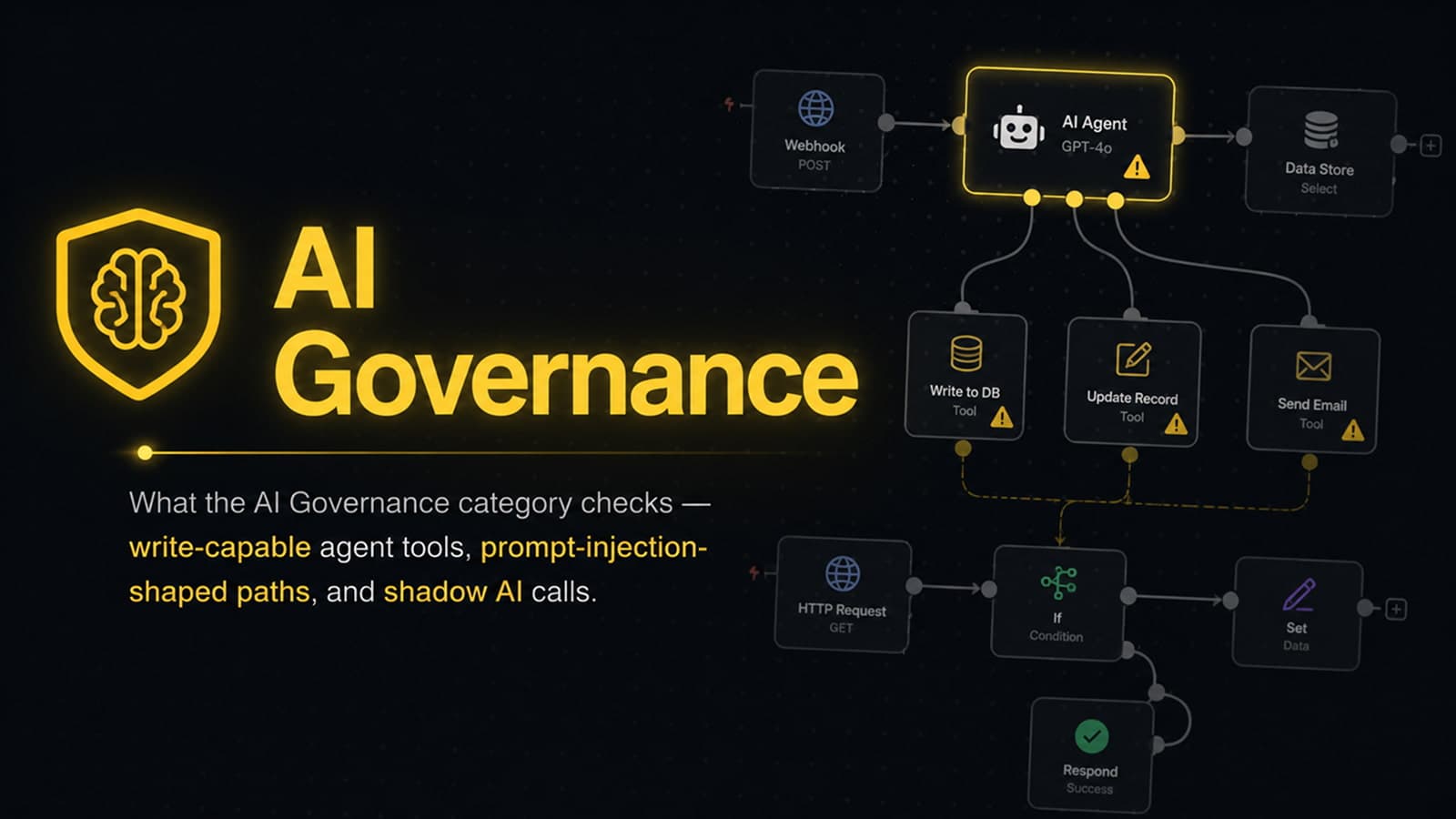
What the AI Governance category checks — write-capable agent tools, prompt-injection-shaped paths, and shadow AI calls — with examples, score impact, and recommended fixes.

flowscanagentsn8n
Observability

Observability

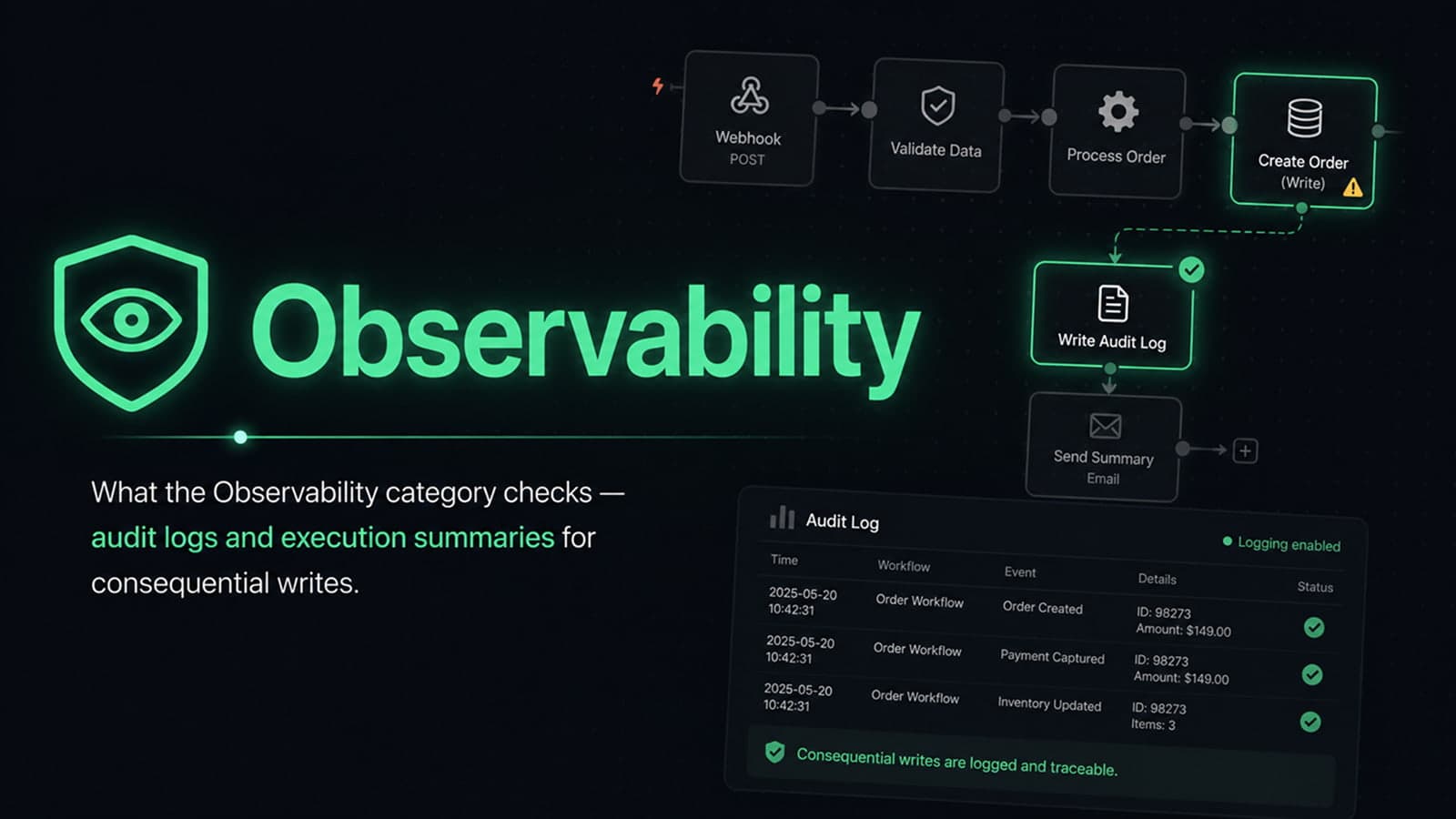
What the Observability category checks — audit logs and execution summaries for consequential writes — with examples, score impact, and recommended fixes.

flowscann8nmake
Security

Security

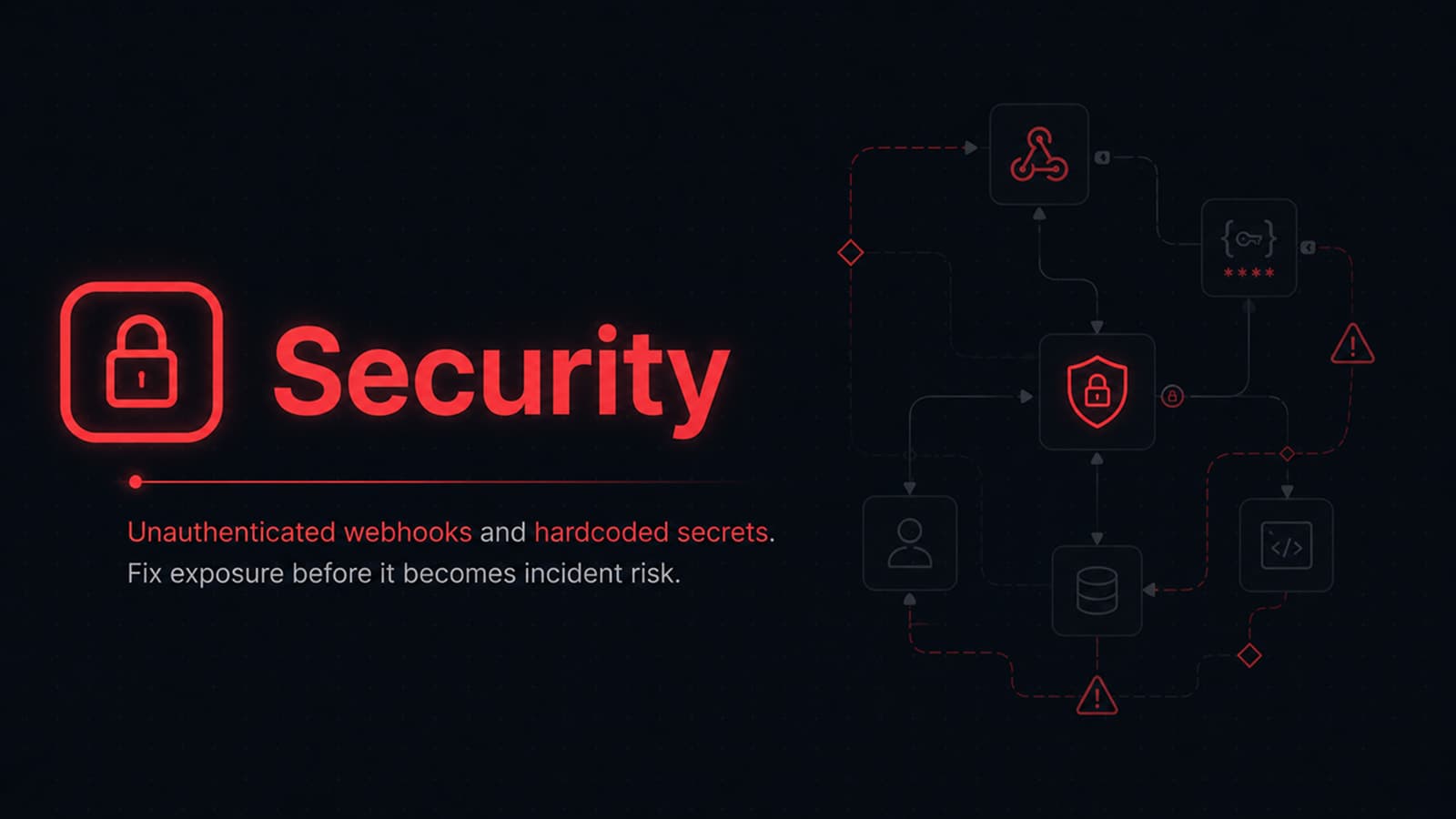
What the Security category checks — unauthenticated webhooks and hardcoded secrets — with examples, score impact, and recommended fixes.

flowscann8nmakewebhooks
Naming

Naming

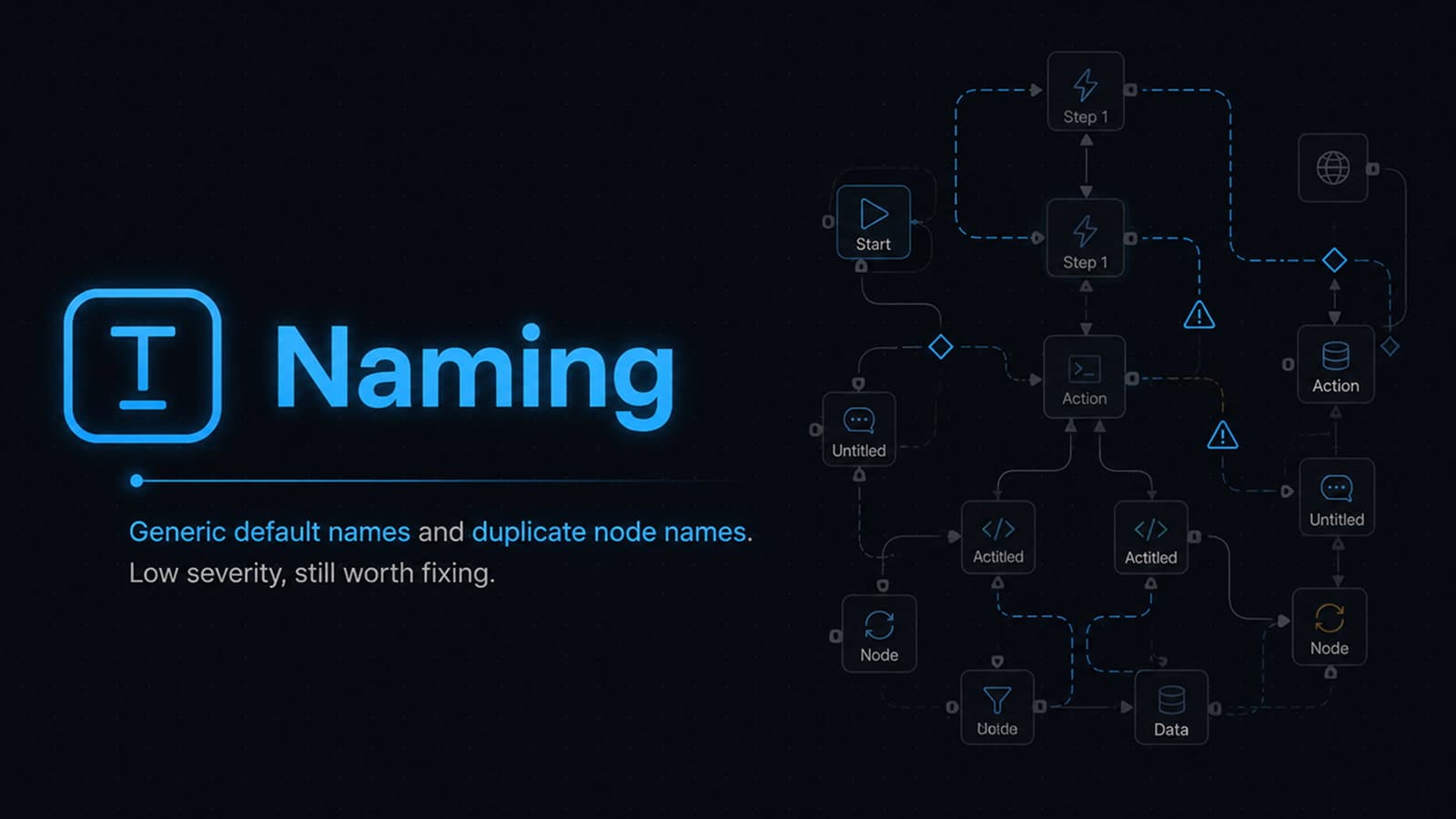
What the Naming category checks — generic default names and duplicate node names — with examples, score impact, and recommended fixes. Low severity, still worth fixing.

flowscanmaintainability
Complexity

Complexity

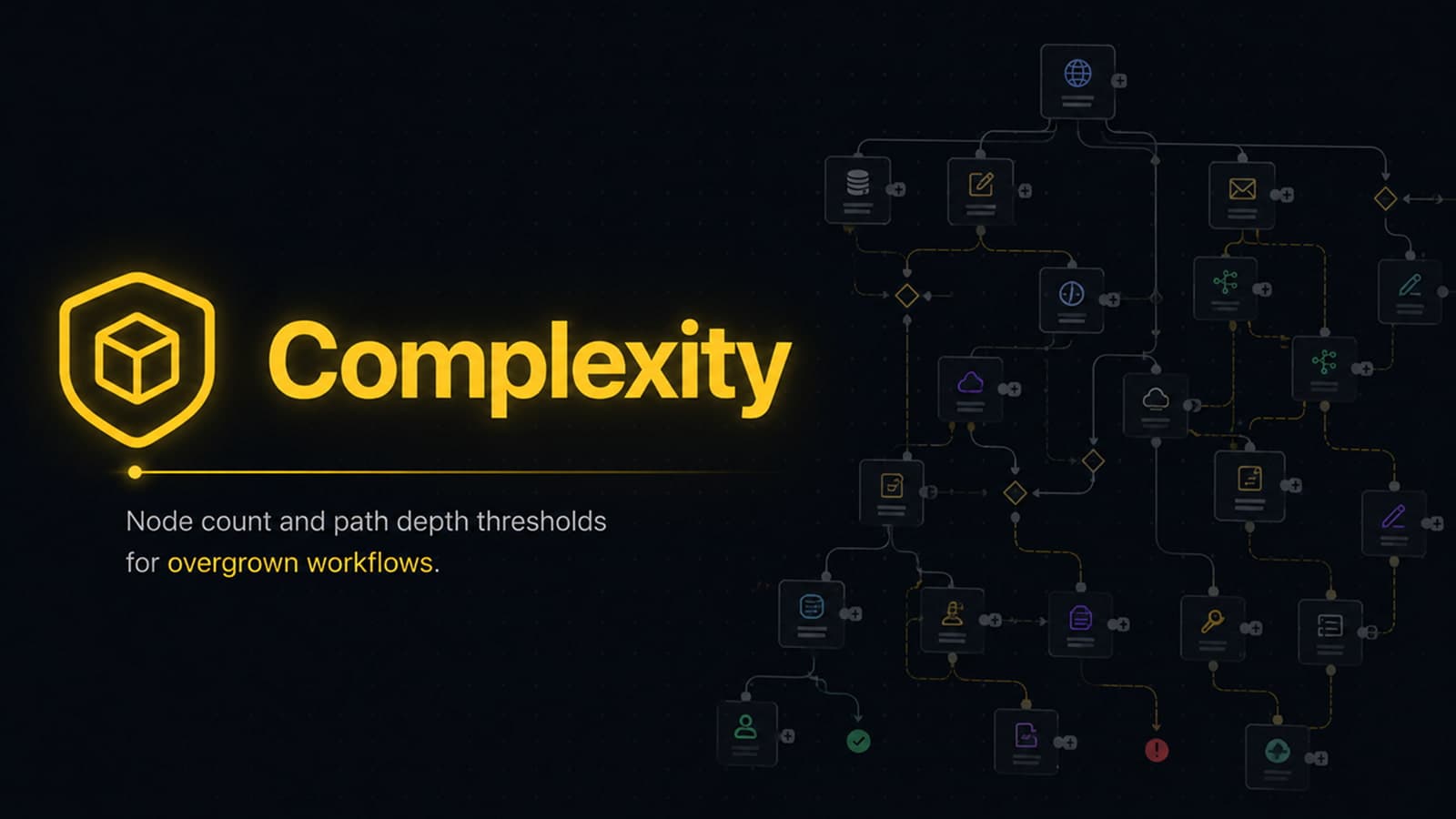
What the Complexity category checks — node count and path depth thresholds — with examples, score impact, and recommended fixes for splitting an overgrown workflow.

flowscanmaintainabilityarchitecture